
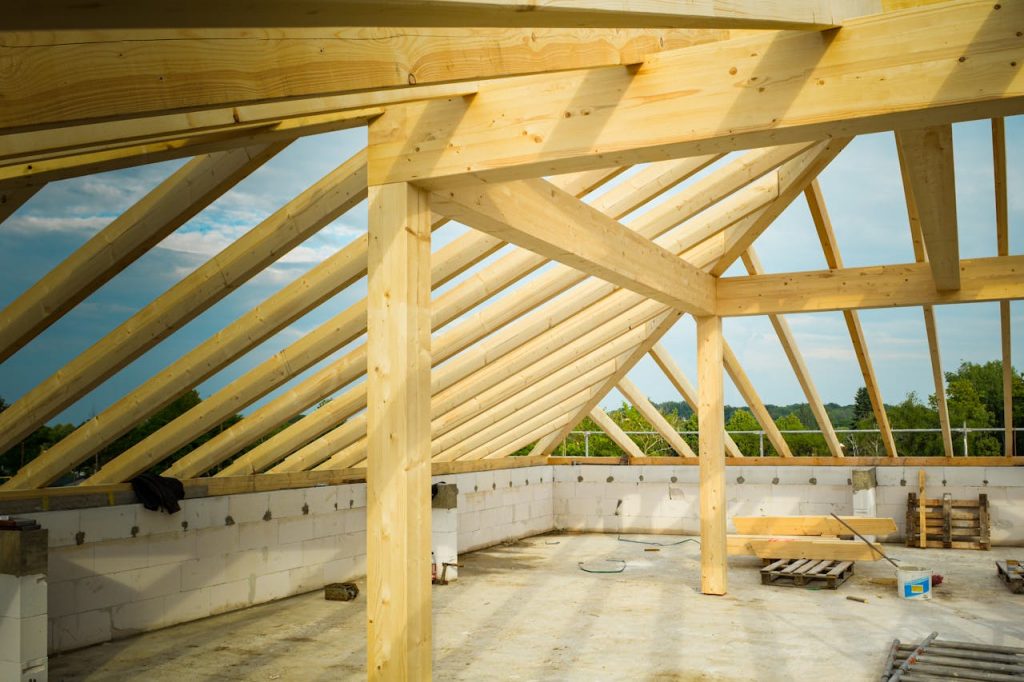
When planning a home extension, loft conversion or internal alteration, choosing the right type of beam is critical. The decision between steel and timber beams directly affects the structure’s safety, durability, design flexibility and long-term performance.
While both materials are commonly used in UK construction, they behave differently under load and have different strengths and limitations. This guide explains the key differences to help homeowners, architects and contractors make informed decisions.
Understanding the Role of Beams in an Extension
Beams carry and transfer loads from above — floors, roofs, walls and live loads — to suitable supports like walls, columns or foundations. When an extension involves:
- removing a load-bearing wall
- creating an open-plan kitchen
- adding large bi-fold or sliding doors
- converting a loft
- supporting new floors or roofs
…a beam becomes the central structural element.
Choosing the correct beam material ensures:
- safety
- compliance with Building Regulations
- adequate strength and stiffness
- minimal deflection
- durability over decades
Steel Beams (RSJs / I-Beams / Universal Beams)
Steel beams are the most widely used option for extensions and major structural alterations in the UK.
Advantages of Steel Beams
1. High Strength for Long Spans
Steel can support heavy loads across long distances without bending excessively. This makes it ideal for:
- open-plan layouts
- eliminating internal columns
- supporting large roof loads
Steel beams commonly span 4–8 metres in domestic projects, something timber rarely achieves.
2. Predictable and Reliable Performance
Steel behaves consistently and can be designed precisely using structural calculations. Engineers can easily verify:
- bending capacity
- shear resistance
- deflection limits
- lateral stability
This ensures full compliance with Building Regulations Part A.
3. Slimmer Beam Sections
Steel has a much greater strength-to-size ratio than timber, meaning:
- less depth required
- cleaner architectural lines
- more headroom preserved
This is especially beneficial in loft conversions or rooms with limited ceiling height.
4. Ideal for Major Alterations
Steel is preferred for:
- removing load-bearing walls
- supporting new openings
- chimney breast removals
- loft conversions involving purlin removal
- large extensions
It handles high or unpredictable loads with ease.
Disadvantages of Steel Beams
1. Heavier and Harder to Install
Steel beams require:
- lifting equipment
- multiple installers
- proper temporary support
This increases installation time and labour cost.
2. Fire Protection Required
Steel must be protected to meet fire safety rules. This is commonly achieved by:
- encasing in plasterboard
- using intumescent paint
3. Condensation and Thermal Bridging Risks
Without proper insulation, steel can cause cold spots. This is addressed through:
- insulated pads
- proper boxing
- thermal breaks
Timber Beams (C24 / LVL / Glulam / Flitch Beams)
Timber beams can be an excellent choice for the right application, especially in smaller domestic projects.
Advantages of Timber Beams
1. Lightweight and Easy to Handle
Timber beams can often be installed without heavy machinery. This reduces:
- labour
- time
- installation complexity
2. Good for Shorter Spans
Where spans are typically under 3.5 metres, timber can be a cost-effective option if loads are modest.
3. Natural Insulation
Timber performs better than steel in terms of thermal bridging, reducing heat loss.
4. Environmentally Friendly
Timber is renewable, recyclable and lower in embodied carbon compared to steel.
Disadvantages of Timber Beams
1. Limited Span Capability
Timber beams require greater depth for longer spans and often cannot achieve the same performance as steel.
2. More Deflection Over Time
Even when structurally safe, timber is prone to:
- sagging
- creep (gradual deflection)
- vibration
This can cause cracking in finishes.
3. Moisture Vulnerability
Timber can suffer from:
- rot
- insect attack
- moisture movement
- warping
This makes it less suitable in certain environments.
4. Limited Load Capacity
Timber beams often struggle under:
- concentrated loads
- multi-storey loads
- heavy roof loads
Flitch Beams: A Hybrid Option
Flitch beams — timber beams reinforced with a steel plate — offer a middle ground:
Pros:
- stronger than solid timber
- lighter than steel
- suitable for medium spans
Cons:
- more expensive
- requires precise installation
- performance still below full steel
Cost Comparison
Timber usually wins on cost for short spans, but steel wins for medium and long spans or heavier loads.
Which Beam Should You Choose?
Choose Steel If:
- you want open-plan space
- span is 4m or greater
- the beam carries roof loads
- structural alterations are significant
- large openings are planned (bi-folds)
Choose Timber If:
- span is short
- loads are light or moderate
- installation access is restricted
- sustainability is a priority
How Nicholson Associates UK Can Help
We provide:
- structural beam design
- complete steel and timber sizing
- load assessments
- connection details
- padstone and support design
- Building Control–ready calculations
- construction-phase guidance
Our goal is to ensure your beam is safe, compliant, and cost-efficient while preserving the layout you want.
Planning an extension? Contact Nicholson Associates UK today for professional steel or timber beam design.